
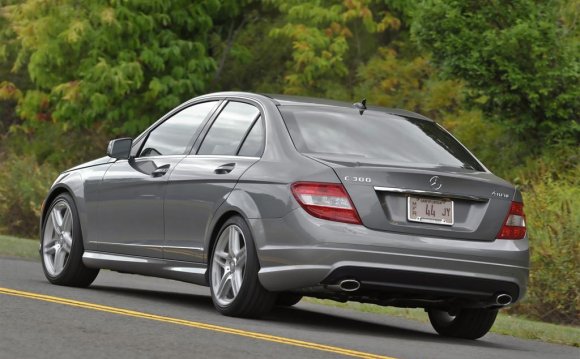
 Strengthening its expression of and association with luxury and refinement over the decades, Mercedes-Benz has built one of the most distinct brand identities in the automotive world. Interestingly, however, the origins of Mercedes-Benz were the very beginnings of the entire industry: Karl Benz created the world's first automobile, a three-wheeled vehicle dubbed the Benz Patent Motor Car, in 1886. The same year, Gottlieb Daimler and engineer Wilhelm Maybach created a four-wheel, petrol-powered car, and the world was changed. The two companies merged in 1926. Soon they adopted a three-pointed star wreathed in a laurel as the Mercedes-Benz logo; Daimler had dreamed up the threefold signature for a company whose engines would be used on land, in the air and at sea. From the beginning, Mercedes-Benz established itself as the pinnacle of automotive excellence and innovation, with engineering achievements such as the first four-wheel suspension and the "crumple zone" front body designed to absorb the impact of a crash. Model after model, Mercedes-Benz upped the ante, through the elegant 600 sedan in the Sixties and the launch of the S-Class line in the Seventies. The parent company inadvisably acquired Chrysler in the Nineties, then quality levels for the Mercedes-Benz brand per se fell. But Mercedes-Benz recovered nicely and now fields its most complete lineup ever.
RELATED VIDEO


RELATED FACTS
-
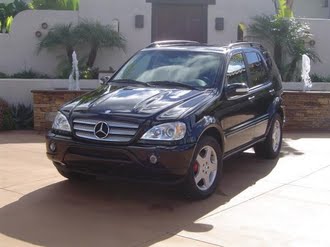 The Mercedes-Benz M-Class is a luxury sport utility vehicle (SUV), first offered in 1997 as a 1998 model, and built by the German automaker Mercedes-Benz. Gradually, the M-Class became a sales success in the United States and Mexico. In terms of size, it is slotted...
Share this Post
latest post
-
 Mercedes-Benz Sprinter Van MPG February 15, 2015
 -
 Certified Pre Owned Mercedes Benz S550 August 5, 2015
 -
 Mercedes Benz dealership in Charlotte NC January 17, 2016
 -
 2012 Mercedes Benz Coupe April 24, 2014
 -
 Mercedes Benz 190e AMG July 10, 2017
 -
 2015 Mercedes-Benz S65 AMG August 5, 2016
 -
 2014 Mercedes Benz E63 AMG Wagon December 28, 2016
 -
 Mercedes Benz a Class fuel consumption October 19, 2012
 -
 Mercedes Benz used car dealership March 24, 2013